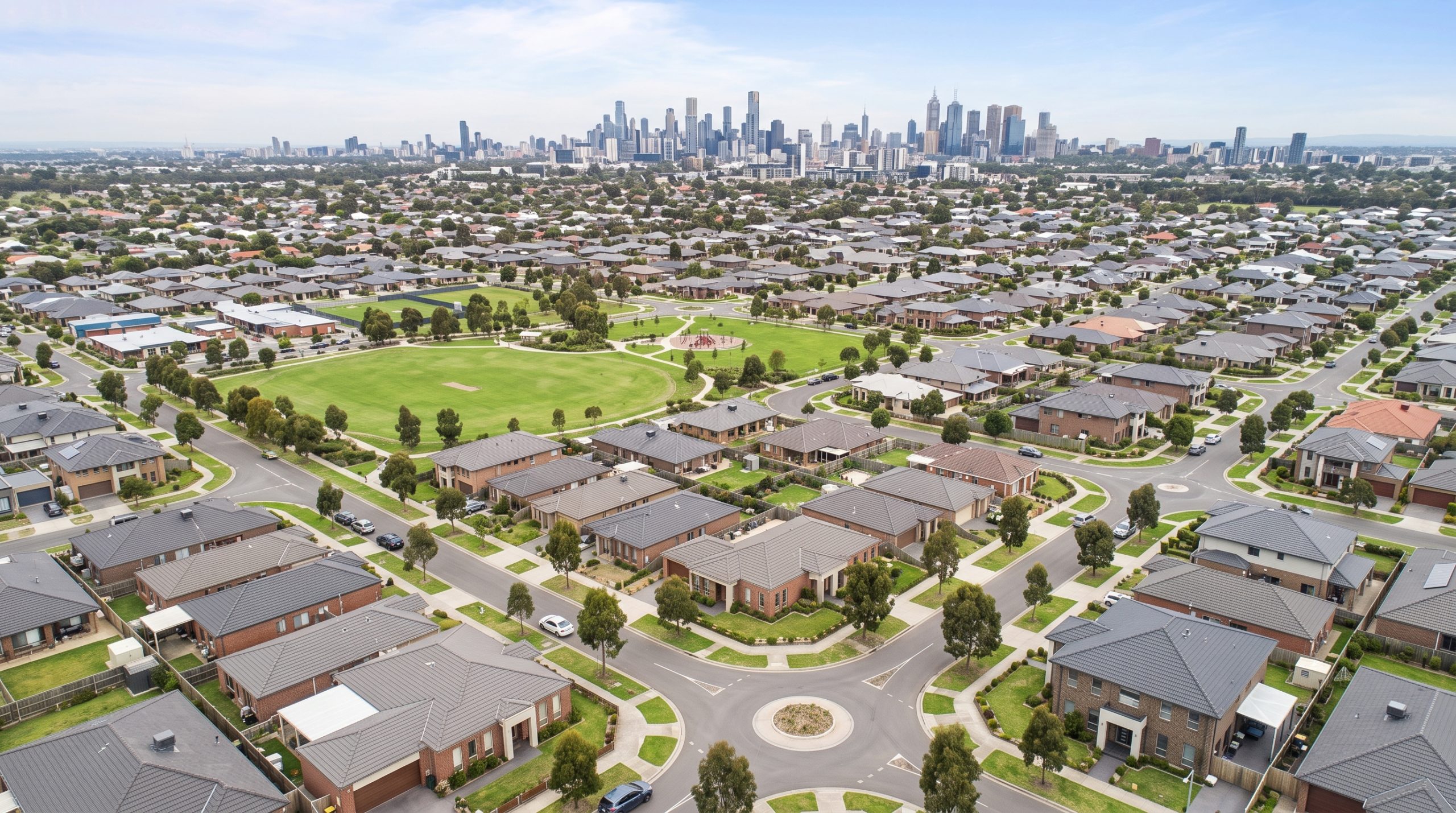
It’s an annual tradition for Melbourne property investors: opening the mail (or inbox) from the State Revenue Office (SRO) and, in recent years, bracing for the total.
The 2026 assessments have landed, and they are generating significant anxiety among landlords. Between the expansion of the Vacant Residential Land Tax (VRLT), the shifting Congestion Levy boundaries, and complex valuation methods, understanding your bill is no longer straightforward.
This post breaks down exactly what Melbourne investors need to know about the 2026 land tax landscape—and the specific dates you cannot ignore.
The New VRLT Reality: More Suburbs, More Complexity
If 2024 and 2025 were the “warm-up” years, 2026 is the reality check for the Vacant Residential Land Tax.
While the “general rate” (1% of the Capital Improved Value) still applies to residential properties in metropolitan Melbourne that were vacant for more than six months in 2025, the rules have subtly shifted.
Key 2026 Changes:
1. “Unimproved” Land: The 2026 assessments are the first to capture vacant residential land that has remained unimproved for five years or more across all of Victoria (if that land is not used for business). If you’ve been holding a residential block in Doncaster or South Yarra without building, the SRO is now applying VRLT.
2. The New Exemptions (Use Them): New exemptions apply for 2026. For example, some land that is contiguous to a principal place of residence, or land that cannot be developed due to planning restrictions, may now be exempt. This is not automatic—it must be applied for.
Understanding the 2026 Valuations
The land tax you pay in 2026 is based on your site value as of 1 January 2025.
Melbourne’s property market has been highly fragmented in recent years. While many inner-city apartment values have stabilised or grown, some outer-suburban house values saw minor dips in 2025.
If your land tax bill shows a significant increase, but you believe your actual site value dropped in the 2025 calendar year, you need to check your assessment. The SRO often lags slightly in capturing rapid market shifts.
Other Local Hikes: The Congestion Levy
For investors holding commercial properties (like medical suites) or apartments in specific outer-city corridors like South Yarra, Richmond, Cremorne, and Southbank, the Congestion Levy on parking spaces has seen another jump. This levy is no longer confined to the strict CBD, and the boundaries are expanding.
Critical Dates: The 60-Day Window
Once you receive your assessment, the clock starts.
You have 60 days from the date of the assessment (which is not necessarily the date you opened it) to object.
To object successfully, you cannot simply say, “My bill is too high.” You must provide evidence, usually in the form of:
- Comparable sales data from around 1 January 2025 shows a lower site value.
- A formal valuation showing an error in the SRO’s site valuation.
- Planning restriction documentation.
Making Sense of the Bill
Navigating these 2026 updates is complex. In Victoria, property investment is about active management, not passive income.
At RENTED, we don’t just handle maintenance; we monitor the landscape for our clients. We work with our network of local Melbourne valuer partners to review your assessments and ensure you are not paying more than your legal requirement.